

Last Updated: November 18, 2026
Quick Summary
Lure fishing is casting an artificial lure and retrieving it to imitate prey, which lets you cover water quickly and search for active fish. Beginners should match their rod, reel, line and lure to the target species, water depth and conditions. Start with a medium-power spinning outfit and a small selection of natural-profile lures.
- Choose a medium-power spinning or baitcasting outfit matched to the lure weights you plan to throw.
- Murray cod respond to big-profile lures that stay in contact with timber and rock.
- Use a steady retrieve first, then vary speed, pause length and depth one at a time.
- Set baitcaster spool tension so the lure falls slowly, which reduces backlashes.
- If fish are not biting, change retrieve speed first, then depth, profile, colour and location.
Table of Contents
- Why Lure Fishing Suits Australian Freshwater Anglers
- Essential Gear for Lure Fishing Beginners
- How to Cast a Baitcaster Reel Without Backlashes
- Matching Lures to Target Species and Water Conditions
- Best Lures for Murray Cod in Snag-Heavy Rivers
- How to Rig Soft Plastics for Bass and Yellowbelly
- Basic Retrieves and Troubleshooting When Fish Are Not Biting
- Your First Session Plan and Next Steps on the Water
- Frequently Asked Questions
Why Lure Fishing Suits Australian Freshwater Anglers
Lure fishing lets you cover water quickly and search for active fish, which makes it one of the most rewarding ways to start on Australian rivers and impoundments. At SMAK Lures, we make Australian-built lures for native species, so this guide focuses on practical steps you can apply on your next trip. Fishing lure selection basics for freshwater species
Freshwater lure fishing is less about buying the most expensive tackle and more about matching your gear, lure and retrieve to the fish and the water in front of you. Guides and practitioners consistently emphasise that good technique and observation matter as much as equipment. Freshwater lure fishing guide for beginners
Lure choice has to match conditions. Steady retrieves often suit spinnerbaits and crankbaits, while soft plastics, jigs and spoons frequently perform better with pauses. Watch how the fish respond and adjust.
Video instruction is also a useful way to learn retrieves and casting. Experienced anglers demonstrate technique clearly, and watching them can shorten the learning curve. Lure fishing technique demonstration
Essential Gear for Lure Fishing Beginners
You do not need a full tackle room to start. A capable rod and reel, a sensible line, a small selection of lures and a few spare terminal items will get you fishing. Build the kit around the species you chase most often.
Browse our hard body lures to see the range available for a beginner's first selection, then build around the water you fish most.
Choosing a Rod and Reel Setup
For most beginners, a medium-power spinning or baitcasting outfit balances casting distance with control. Spinning gear is easier to learn because the line comes off the spool without much effort, which keeps frustration low during the first sessions.
Match the outfit to the lure weights you plan to throw. A rod rated for the lure weight gives you a lighter, more responsive feel and better hook-setting power.
Line, Leader and Terminal Tackle
Braid gives sensitivity and casting distance, while fluorocarbon leader helps reduce visibility in clear water. Use a leader of an appropriate breaking strain for the species and cover you fish, and keep spare hooks, split rings and swivels in your kit.
Check knots and terminal connections regularly. A small nick in line near a lure is one of the most common reasons anglers lose fish.
How to Cast a Baitcaster Reel Without Backlashes
Backlashes are the most common frustration for anglers new to baitcasters. Set the spool tension so the lure falls slowly when you release the thumb button, then let the lure pull line off the spool gradually.
Practise in an open area first. Start with a lighter lure, keep your thumb on the spool as the lure lands, and gradually increase distance once your casts are consistent. Lure fishing gear for beginners is easiest to master in short, repeated sessions.
Matching Lures to Target Species and Water Conditions
Lure selection is a decision, not a preference. Work through four variables in order, target species, water depth, water clarity and light level, and let each one narrow the shortlist before you tie anything on.
Start with the species, not the lure
Different native fish hunt in different ways, and that shapes the lure family you reach for first.
- Murray cod are ambush predators that sit tight to timber and rock. They respond to lures that displace water and stay in contact with structure, chatterbaits, tail spinners, large spinnerbaits and swimbaits rigged weedless. Big profile, big vibration, slow and close to cover.
- Golden perch (yellowbelly) roam edges, flats and deeper holes and take a wider range of presentations. Lipless crankbaits, small spinnerbaits, soft plastics on jig heads and vibration-style blades all produce fish. They are more willing to chase than cod, so a steady or lift-and-drop retrieve works.
- Australian bass sit around submerged timber, rock ledges and shaded banks in rivers and impoundments. Small crankbaits, surface lures at dawn and dusk, and finesse soft plastics on light jig heads are the core starting points.
- Estuary species such as flathead, bream and tailor reward different approaches again, soft plastics hopped along sand edges for flathead, lightly weighted plastics and small hard bodies for bream, and metal slugs burned across the surface for tailor.
If you are unsure what is in front of you, start with a neutral, natural-profile lure in the 60-90 mm range and adjust from there.
Match the lure to the depth you are fishing
Depth decides whether you need a lure that dives, sinks, floats or stays on top.
- Surface (0-0.5 m): poppers, walkers and surface frogs at low light or over shallow weed. Best at dawn, dusk and on overcast days.
- Shallow (0.5-2 m): shallow-diving crankbaits, spinnerbaits and lightly weighted soft plastics. Ideal along banks, flats and snag edges.
- Mid-water (2-5 m): lipless crankbaits, chatterbaits, tail spinners and medium-diving hard bodies. Count the lure down before you retrieve to control depth.
- Deep (5 m+): heavy jig heads with soft plastics, deep-diving crankbaits, blades and spoons. Slow, bottom-contact presentations matter more than speed.
A simple rule: if you are not ticking bottom or structure at least occasionally, you are probably fishing above the fish.
Adjust for clarity, light and water level
- Clear water and bright light: smaller, more natural profiles, translucent or natural colours, and longer casts so you do not spook fish. Fluorocarbon leader helps.
- Murky or tannin-stained water: larger profiles, more vibration, and darker or brighter colours, black, chartreuse, orange and gold all earn their place. Slow the retrieve and give fish more time to find the lure.
- Low light (dawn, dusk, overcast): surface and shallow-running lures become far more productive, and fish move shallower.
- Rising water: fish push into newly flooded edges and structure, fish shallow and tight to cover.
- Falling or low water: fish pull back to deeper holes, channel edges and the outside of bends, slow down and fish deeper.
If-then quick reference
- If the water is clear and the sun is high, then downsize the lure and lengthen your cast.
- If the water is dirty after rain, then upsize the profile, add vibration and slow the retrieve.
- If fish are holding in timber, then choose a snag-resistant presentation and keep the lure in contact with structure.
- If you are marking fish deep but getting no strikes, then switch to a bottom-contact lure and count it down.
- If surface action stops as the sun rises, then move to a mid-water or deep presentation rather than persisting on top.
Our spinnerbait range covers a useful spread of blade and skirt options for different water conditions, which makes it a practical starting point for matching lure to environment.
Watch out: matching lure to species is only half the decision, a lure that is right for the fish but wrong for the depth will still go untouched.
The article breaks lure choice down by species, depth and water conditions, summarised below.
| Depth | Lure types suited | Where to fish |
|---|---|---|
| Surface (0-0.5 m) | Poppers, walkers, surface frogs | Dawn, dusk, overcast days |
| Shallow (0.5-2 m) | Shallow-diving crankbaits, spinnerbaits, light soft plastics | Banks, flats, snag edges |
| Mid-water (2-5 m) | Lipless crankbaits, chatterbaits, tail spinners | Count lure down to control depth |
| Deep (5 m+) | Heavy jig heads, deep crankbaits, blades, spoons | Slow, bottom-contact presentations |
Best Lures for Murray Cod in Snag-Heavy Rivers
Murray cod hold tight to timber, so your lure needs to come through snags without fouling every cast.
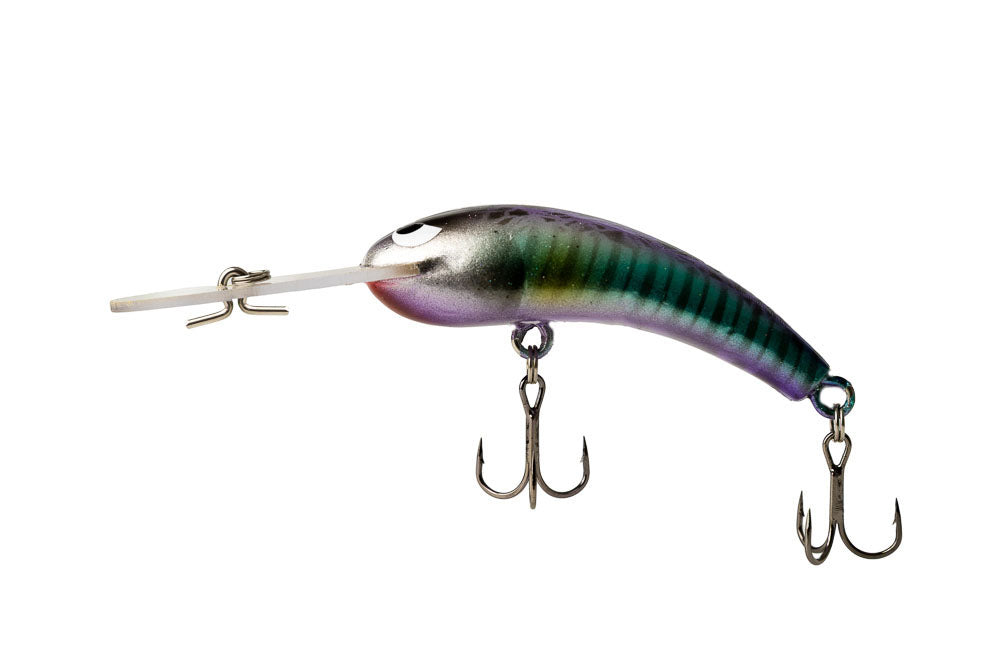
The Golden Child is marketed for tolling Golden Perch and is built for snag-heavy presentations, making it worth a look when fishing around structure. Before rigging up for big cod, it is also worth reading whether heavy duty hooks justify the cost for the fishing you do.
How to Rig Soft Plastics for Bass and Yellowbelly
Soft plastics are effective for bass and yellowbelly in deeper structure, especially when you fish them slowly along the bottom. Rig them on a jig head matched to the depth and current, then use short lifts and pauses to draw strikes.
Our Ice Jig suits this style of fishing, with two tail designs that work well around tight structure on the flats and over deeper ground.
Basic Retrieves and Troubleshooting When Fish Are Not Biting
Most beginners lose fish not because the lure is wrong but because they change too many things at once. Work through the retrieves below in order, then use the diagnostic sequence when bites stop.
The four core retrieves
- Steady wind. Cast, close the bail, and wind at a consistent pace. This is the baseline, it tells you whether fish are active and willing to chase. Use it with crankbaits, lipless crankbaits, spinnerbaits and metal slugs.
- Lift-and-drop. Wind a few turns, then let the lure fall on a semi-tight line. Most strikes come on the fall. Use it with soft plastics on jig heads, blades and tail spinners.
- Twitch-and-pause. Wind, then sharp rod-tip twitches followed by a pause of one to three seconds. Use it with jerkbaits, soft plastics and surface walkers.
- Slow roll. Wind just fast enough to keep the blade or tail working, keeping the lure deep and in contact with structure. Use it with spinnerbaits and chatterbaits around timber and rock.
Vary one element at a time, speed, pause length, or depth, so you learn what the fish responded to.
A diagnostic sequence when fish are not biting
Work down this list in order and stop when you get a response.
- Change the retrieve speed. If you have been winding fast, slow down by half. Cold water and pressured fish often want a slow roll or long pauses.
- Change the depth. Count the lure down longer before retrieving, or switch to a lure that runs deeper. If you are not contacting bottom or structure, you are likely above the fish.
- Change the lure profile. Move from a wide, high-vibration lure to a smaller, natural profile, or the reverse if the water is dirty.
- Change the colour. Natural in clear water, darker or brighter in murky water. This is a low-cost change; do it after speed and depth.
- Change the location. Move 20-50 m along the bank, to the next snag, or to the opposite edge of a point. Fish are not evenly spread.
- Change the time. If you can, fish the first and last hour of light. Low light moves fish shallow and makes surface and shallow lures far more effective.
A common pattern is that beginners retrieve too fast for cold or pressured fish, and give up on a location before working it thoroughly.
Reading the response
- Follows but no strike: downsize the lure or add a pause, the fish is interested but not committed.
- Short strikes or swipes: change the hook size or switch to a trailer hook, and slow the retrieve so the fish commits.
- Taps or weight on the line: you are contacting structure or bottom, keep the lure there and slow down.
- Nothing at all after several lure changes: move location. The fish are probably not there.
Practice drills for your first sessions
- Spend 15 minutes casting to a target (a stick, a marker buoy) to build accuracy before fishing.
- Fish one snag or structure thoroughly with three retrieves before moving on.
- Keep a simple note of lure, depth, retrieve and result for each fish, after a few trips, patterns emerge.
If you are not getting bites, move to a different section of water, change the lure profile or slow down. A common mistake is retrieving too fast for cold or pressured fish.
Your First Session Plan and Next Steps on the Water
Plan a short first session on water you know well. Cast to likely structure, work through a few retrieves and keep notes on what produces a response. Over several trips, these notes become the foundation of your own system.
Start small, learn the water and build your kit as your confidence grows. Shop All of our SMAK Lures range to find lures for the species and conditions you are targeting next.
Frequently Asked Questions
What is the best lure for beginners to use in freshwater?
For most beginners, a spinnerbait or a soft plastic is the easiest place to start. Spinnerbaits such as the SMAK Mini Coop (AUD 19.95) can be cast and retrieved at a steady pace. Hard-bodied lures are also useful but require more practice to get the action right. Choose one or two lure types, learn how they behave in the water, and build from there rather than buying a large mixed selection at once.
How do I choose the right fishing rod for lure fishing?
Match the rod to the lure weight and the species. A medium-action rod suits most freshwater lures and gives enough backbone to pull fish out of snags without lacking feel for the lure. Check the lure weight rating printed on the rod blank and stay within it. A rod that is too stiff will tear hooks free, while one that is too soft makes it hard to set the hook. Pair it with a reel that balances well with the rod so the outfit does not feel heavy during a long session.
How do I rig soft plastics for bass?
A weedless or texas-style rig is the simplest option for bass. Thread a worm hook through the head of the soft plastic and bury the point back into the body so the hook sits weedless. Use a sinker only when you need the lure to get down quickly. Cast past the target, let the lure sink on a slack line, then retrieve with short twitches and pauses. Most strikes happen as the lure falls, so keep your line tight enough to feel a bite without pulling the lure away.
What are the essential items for a beginner lure fishing kit?
A beginner kit needs a medium-action rod and reel, a braided main line with a fluorocarbon leader, a small set of spinnerbaits and soft plastics in natural and bright colours, split rings, a pair of long-nose pliers, a line cutter and a landing net. Add a tackle box to keep items organised. Carry spare hooks and a few extra leaders, since snags will cost you tackle regularly. Check local rules for size and bag limits before you head out, and follow them carefully.
How do you retrieve a lure to attract Australian native fish?
Start with a steady retrieve at a few different speeds, then add pauses and twitches until you find what the fish want that day. Spinnerbaits and chatterbaits work well on a steady retrieve, especially near timber. Soft plastics often benefit from a pause on the fall and short twitches. Vary the rhythm every few casts and note what triggers strikes. Cold water usually calls for slower presentations, while warm, active fish respond to faster movement.
Is it better to use soft plastics or hard-body lures for beginners?
Soft plastics are generally easier for beginners because they are inexpensive, forgiving on the strike and can be rigged in several ways. Hard-bodied lures give a more consistent swim action and can cover water quickly, but they cost more and require learning how the lure dives and wobbles. Many anglers start with soft plastics and add hard-bodies once they understand depth and retrieve speed. Either choice works, so pick the one that suits the water you fish most often.
How do I find the best spots for lure fishing in local rivers and dams?
Look for structure where fish hold and ambush prey, such as fallen timber, rock edges, weed beds, undercut banks and points where current meets slower water. Early morning and late afternoon often produce the most activity. Check local fishing regulations and access rules before you go, and respect private land and protected areas. Watch the water for signs of fish, such as surface activity or bait movement, and fish the edges of cover rather than casting into open water.

