

Last Updated: November 17, 2026
Quick Summary
Heavy duty hooks are worth it for cod fishing whenever timber, heavy line or big fish are involved, because a standard hook can straighten or snap under a cod's load in a snag.
- Murray cod hooks are built with heavier wire and a stronger point for timber.
- A 5/0 to 7/0 hook covers most Murray cod fishing, with 8/0 for big baits.
- A 10/0 on a 40cm cod often misses the jaw or foul-hooks the fish.
- Use a heavy split ring rated above your line class, or tie direct.
- Drag the point across a thumbnail: a light scratch means sharp, skating means replace.
Table of Contents
- What Makes a Heavy Duty Hook for Cod Fishing?
- The Best Hook Size for Murray Cod and Other Cod Species
- Heavy-Duty Hooks for Snag Fishing: Rigging for Timber
- Choosing Heavy Duty Hooks: Strength, Wire Gauge and Failure Resistance
- Matching Hook Size to Target Fish and Method
- Landing Murray Cod in Heavy Cover: Hookset, Drag and Handling
- Frequently Asked Questions
What Makes a Heavy Duty Hook for Cod Fishing?
Heavy duty hooks for cod fishing are built with heavier wire and a stronger point, because Murray cod live in timber where standard hooks can straighten or snap.
The Best Hook Size for Murray Cod and Other Cod Species
Murray cod hook sizing depends on the bait and the fish. Match the hook to the bait first, then to the fish.
Hook Size |
Typical Use |
Bait or Lure |
Notes |
|---|---|---|---|
5/0 |
General purpose, smaller cod |
Yabbies, small shrimp, 100mm plastics |
Easiest to set, best hookup rate on average fish |
6/0 to 7/0 |
All-round snag work |
Medium plastics, worms, small baitfish |
The sweet spot for most river fishing |
8/0 |
Big baits, big fish |
Large baitfish, big swimbaits |
Needs a firmer hookset and heavier leader |
Heavy-Duty Hooks for Snag Fishing: Rigging for Timber
Snag fishing is a rig problem before it is a hook problem. A heavy hook on a weak split ring, worn leader or cheap treble is still a failure waiting to happen.
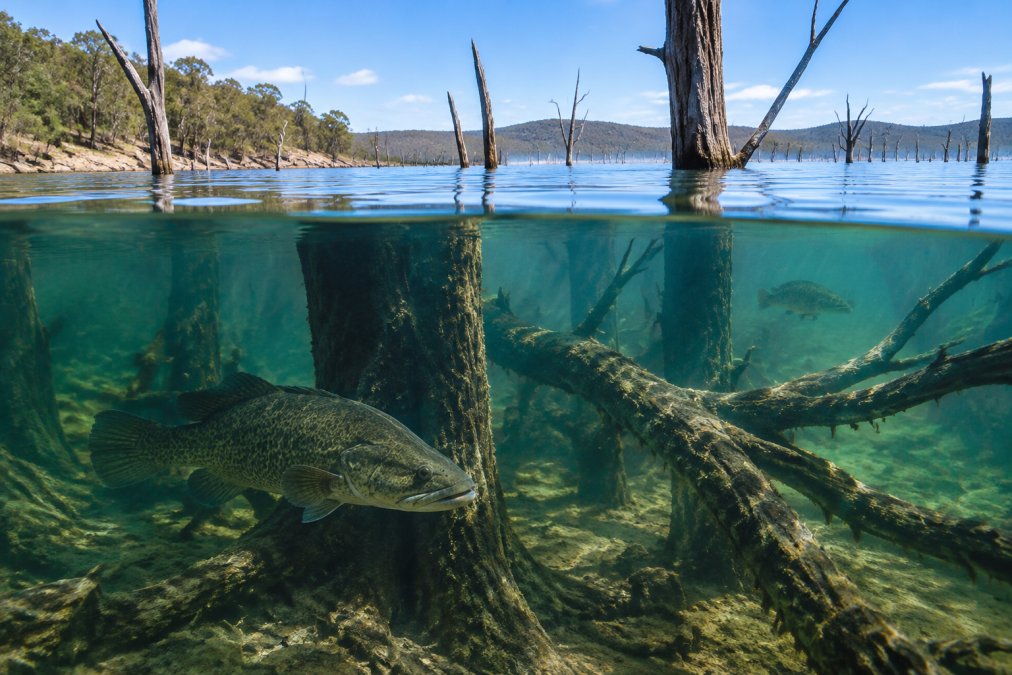
Use a heavy split ring rated above your line class, or tie direct where the lure allows it. In timber, set the drag light enough to slip so a big cod can take line, then turn its head before it reaches the timber.
Choosing Heavy Duty Hooks: Strength, Wire Gauge and Failure Resistance
Hook strength depends on several factors including wire gauge, steel grade and point geometry, and the weakest of these determines when a hook fails. Field check: drag the point across a thumbnail. If it bites and leaves a light scratch, it is sharp; if it skates, sharpen or replace it.
Matching Hook Size to Target Fish and Method
For bait fishing, size the hook to the bait so the point sits clear of the bait mass, with the gap at least as wide as the bait's thickest section. For lure fishing, size the hook to the lure and target.
Landing Murray Cod in Heavy Cover: Hookset, Drag and Handling
Set the hook with a firm sweep rather than a violent strike, since a rod-loading strike on a short line can straighten hooks. Keep the rod tip low and pressure steady, steering the fish away from structure. Support the body horizontally, keep the fish out of the water briefly, and release it head-first into calm water with wet hands.
The gap between a good session and a lost fish in timber usually comes down to hardware. If your hooks and rig components are not up to the load a big cod puts on them, the best lure in your box will not save you. Our spinnerbaits, blades and jigs are hand-assembled and painted here, built for heavy timber and the kind of strikes that test every component. Browse the range and gear up for the next trip.
Frequently Asked Questions
What size hook is best for Murray cod?
For most Murray cod fishing, a 5/0 to 7/0 hook is a common starting point, while larger hooks suit bigger baits. Match the hook gap to your bait so the point sits clear of the flesh. Smaller fish can still take a large hook, but a 5/0 is a safer starting point for mixed-size sessions.
Should I use single or treble hooks on cod lures?
Single and treble hooks each have trade-offs in timber, so choose based on the structure you are fishing and how you plan to release fish.

